Key Retirement Milestones by Age
In This Article…
Preparing for retirement isn’t just about choosing when to stop working. You must also recognize the key age-based milestones that can shape your financial future along the way.
Many important retirement dates occur well before your final day of work. That’s because retirement planning is not a single decision. Rather, it’s an ongoing process shaped by milestones that unfold over several decades. From contribution limit changes to enrollment deadlines, there are several opportunities to build financial independence before and after retirement.
Major Retirement Account Turning Points
Age 50: Catch-Up Contributions
Until you reach age 50, your retirement account contribution limits generally align with the standard annual limits. But after age 50, those limits increase, creating a valuable opportunity to accelerate your savings potential.
In 2026, the 401(k) catch-up contribution limit for most workers aged 50 and older is $8,000. With a current base limit of $24,500, you can contribute up to $32,500 for the year. These limits apply to workplace retirement accounts like 401(k), 403(b), and governmental 457(b) plans.
Additionally, you may be eligible to contribute an extra $1,100 across any traditional or Roth IRAs. This would raise your total amount from $7,500 to $8,600.
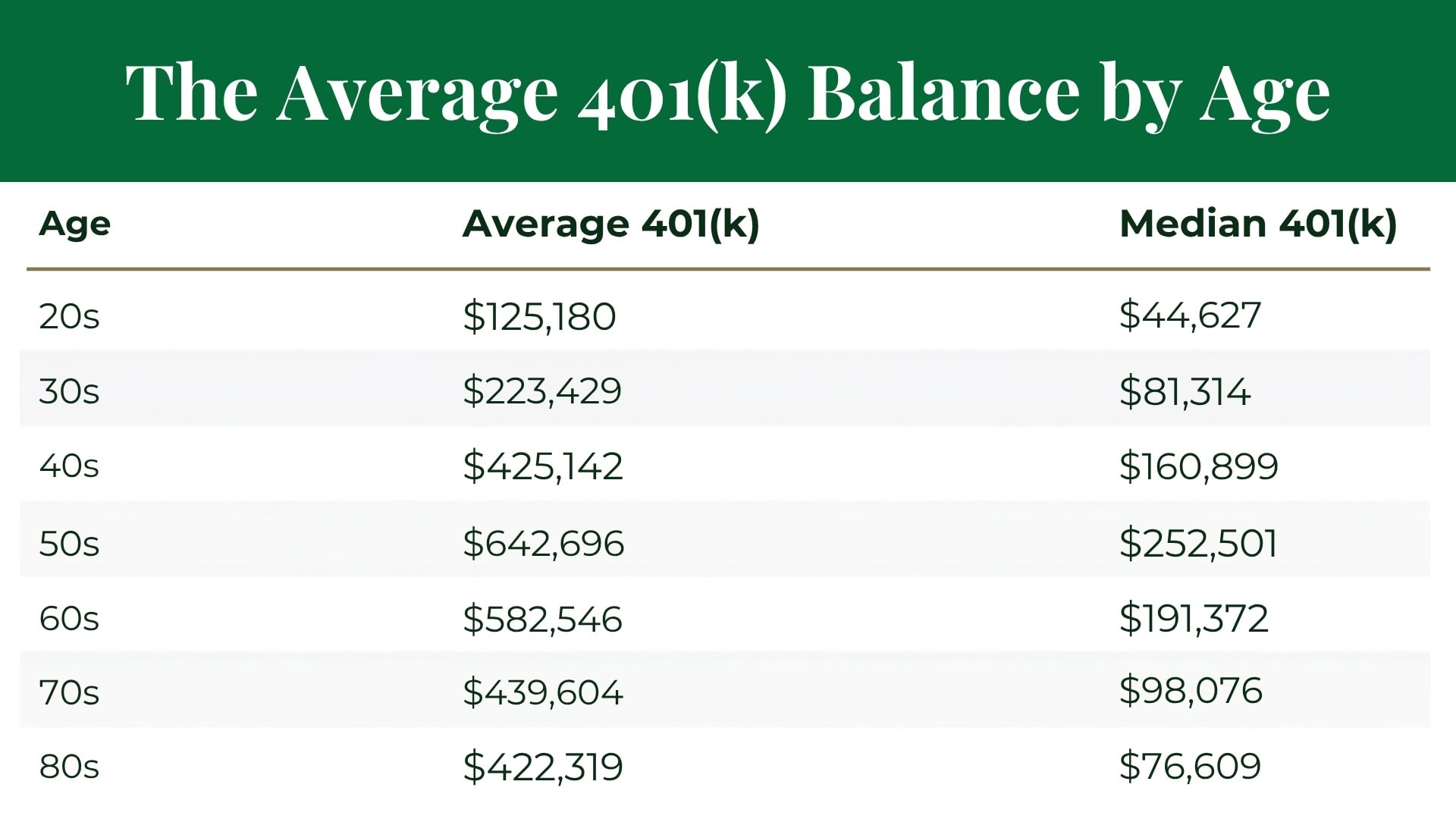
Note. Adapted from The average 401(k) balance by age, by P. Deer, 2026, Empower. https://www.empower.com/the-currency/life/average-401k-balance-age
Age 55: Early Retirement Plan Considerations
If you leave your job in or after the year you turn 55, you can withdraw funds from your 401(k) without a 10% penalty. A few important caveats exist for this “Rule of 55” provision. This rule does not apply if you’ve already rolled your old employer-sponsored retirement plan to an IRA.
You may consider taking advantage of this provision if you need immediate access to your retirement money. Also, it may make sense to do if you have significant savings in a 401(k) plan or are planning a career shift.
Some important considerations to keep in mind are that many plans don’t allow partial withdrawals. You can also trigger long-term tax consequences if you’re not careful. Make sure you’ve consulted a financial professional for guidance before making any decisions.
Age 59½: Penalty-Free Withdrawals
At 59½, you can typically access your retirement funds penalty-free. However, withdrawals from pre-tax accounts may still be subject to income taxes. If you do have sizable tax-deferred savings, you may want to consider drawing them down as early as possible. Future required minimum distributions (RMDs) could push you into a higher tax bracket.
Another strategy to consider at age 59½ is to move your 401(k) into an IRA. Many employer-sponsored 401(k) plans allow in-service rollovers. IRAs can offer more flexibility for income and investment strategies, managing risk, and tax planning.
Keep in mind, just because these opportunities exist, doesn’t mean you must make changes to your accounts. However, it’s important to understand all the options available to you.
Schedule Free 15-Minute Call
We want you to have the opportunity to have any questions about money answered with no obligation.
Ages 60-63: Super Catch-Up Contributions
Once you reach age 60, you may be able to supercharge your savings with up to $35,750 to your employer-sponsored retirement accounts. In 2026, if you’re between ages 60 and 63, you can contribute up to $11,250 as a “super catch-up” contribution. This would be in place of the standard $8,000 catch-up.
Age 70½: Qualified Charitable Donations (QCDs) from an IRA
Starting at age 70½, you can give up to $111,000 directly from your IRA to a qualified tax-deductible charity in 2026. Additionally, if you file taxes jointly, your spouse can donate up to $111,000 from their own IRA.
QCDs can be an effective way to give to charity as well as lower your taxable income. This can reduce your risk of entering a higher tax bracket. QCDs can also eventually count toward fulfilling your RMDs each year, if you meet certain rules.
Eligible Accounts:
- Traditional IRAs
- Rollover IRAs
- Inherited IRAs
- SEP IRAs (inactive plans only)
- SIMPLE IRAs (inactive plans only)
- Under certain circumstances, Roth IRAs
Age 73 or 75: Required Minimum Distributions (RMDs) Begin
To avoid penalties, you must begin taking annual RMDs once you reach age 73. The RMD age jumps to 75 if your birth year is 1960 or later. An RMD is the specific amount the IRS requires you to take out of your tax-deferred retirement accounts. Traditional IRAs, SEP IRAs, SIMPLE IRAs, 401(k)s, 403(b)s, and 457(b) plans all require RMDs.
When you start taking distributions, every dollar counts as taxable income. If you miss a deadline or fail to withdraw your full RMD, you will face a penalty of 25% of the amount you did not withdraw. However, if you correct this mistake in a timely manner, the IRS may reduce the penalty to 10%.
If you’re still working, you can generally delay taking your first RMD from your current employer’s plan. In that case, you would need to begin taking RMDs by April 1 of the year after you retire. However, RMDs still generally begin at age 73 or 75 for previous employer plans and traditional IRAs.

Download Now
Are You Ready To Retire?
Get information and education that can bring you peace of mind with your savings and retirement.
Social Security Benefits Breakdown
Age 62: Eligibility for Social Security Benefits Begins
The earliest age you can begin collecting Social Security retirement benefits is 62. However, claiming early will permanently reduce your monthly payment compared with waiting until your full retirement age. That falls between ages 66 and 67, depending on your birth year.
Your monthly benefit continues to increase the longer you wait to collect. Up to age 70 is when delayed retirement credits stop accruing.
If you claim Social Security early and continue to work, you could lose a portion of your benefit. Currently, if you earn above $24,480, Social Security will withhold $1 in benefits for every $2 over that limit.
Age 66-67: Full Retirement Age for Social Security
As previously mentioned, your full retirement age depends on your birth year. Between 1943 and 1959, your full retirement age ranges from age 66 to 67. If your birth year is 1960 or later, then your full retirement age is 67.
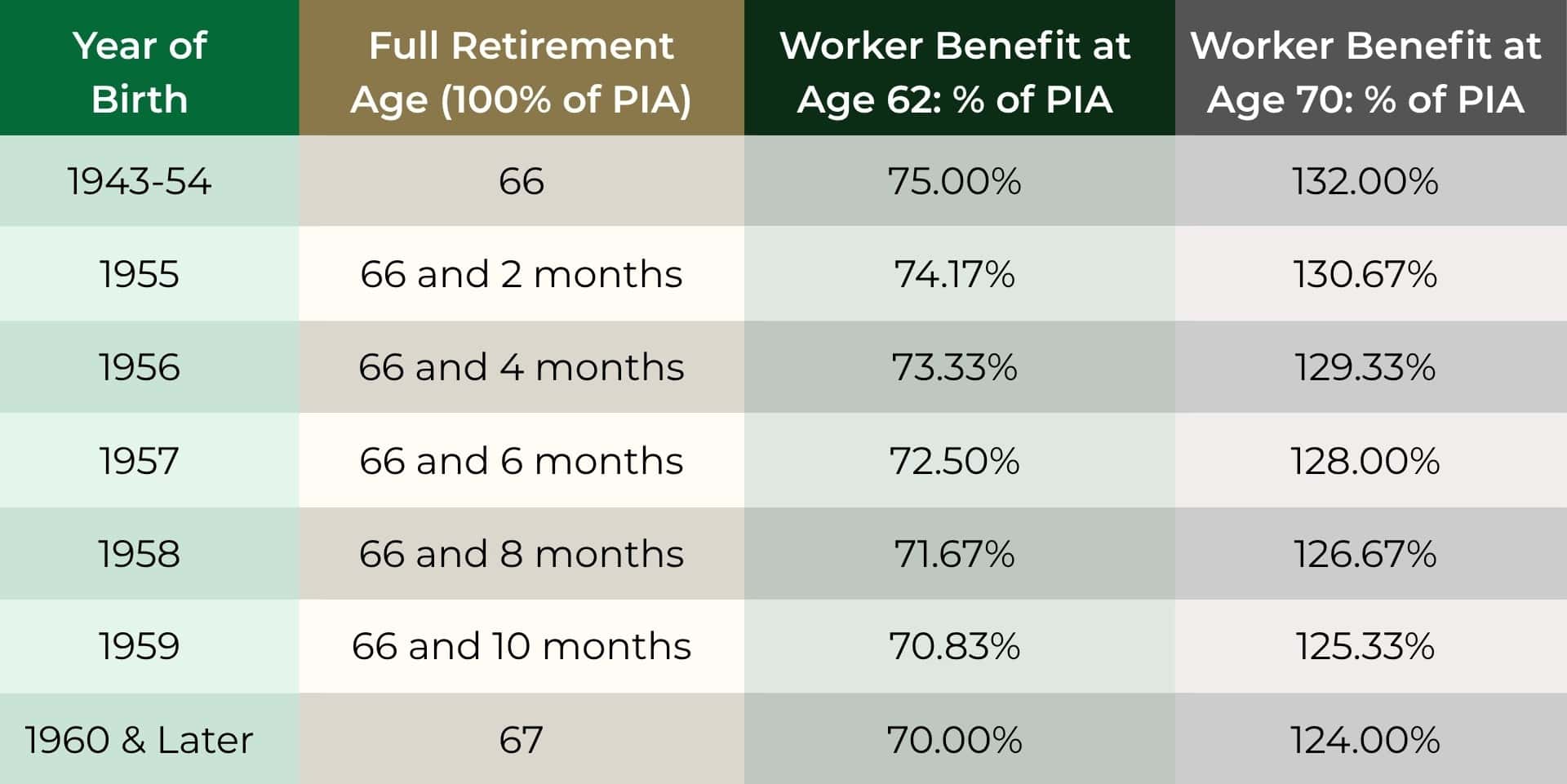
Note. Adapted from Fundamental facts to know about Social Security, by Redwood Credit Union, 2024, Redwood Credit Union. https://www.redwoodcu.org/about/blog/fundamental-facts-to-know-about-social-security/
At full retirement age, you become eligible to receive your full Social Security retirement benefit, known as your primary insurance amount, or PIA. If you’re still working, you will still receive your full benefit no matter how much you earn.
Age 70: Maximum Social Security Benefits
Delaying Social Security until age 70 provides the largest monthly benefit. This can be up to 32% higher than benefits at your full retirement age. At this point, there is no additional advantage in delaying benefits any longer.
Ultimately there’s no one-size-fits-all answer for when or how to take Social Security. Your unique claiming strategy will depend on a variety of factors. Along with your other income, you should consider your health and longevity, employment, and marital status.
Healthcare Planning Considerations
Age 55: Health Savings Account (HSA) Catch-Up Contributions
In 2026, the HSA contribution limits are $4,400 for self-only coverage and $8,750 for family coverage. Starting at age 55, you can make an additional catch-up contribution of $1,000. However, once you enroll in Medicare, you can no longer make pre-tax contributions to an HSA.
To contribute to an HSA, you must have a high-deductible health plan (HDHP). An HSA allows you to save for medical expenses in retirement on a tax-advantaged basis. Contributions are tax-deductible, and the money grows tax deferred. If you use withdrawals for qualified medical expenses, they are completely tax-free.
Age 65: Medicare Enrollment
Missing Medicare deadlines can incur late-enrollment penalties, so it’s important to understand the rules. If you’re already collecting Social Security at 65, the Social Security Administration (SSA) will automatically enroll you in Medicare.
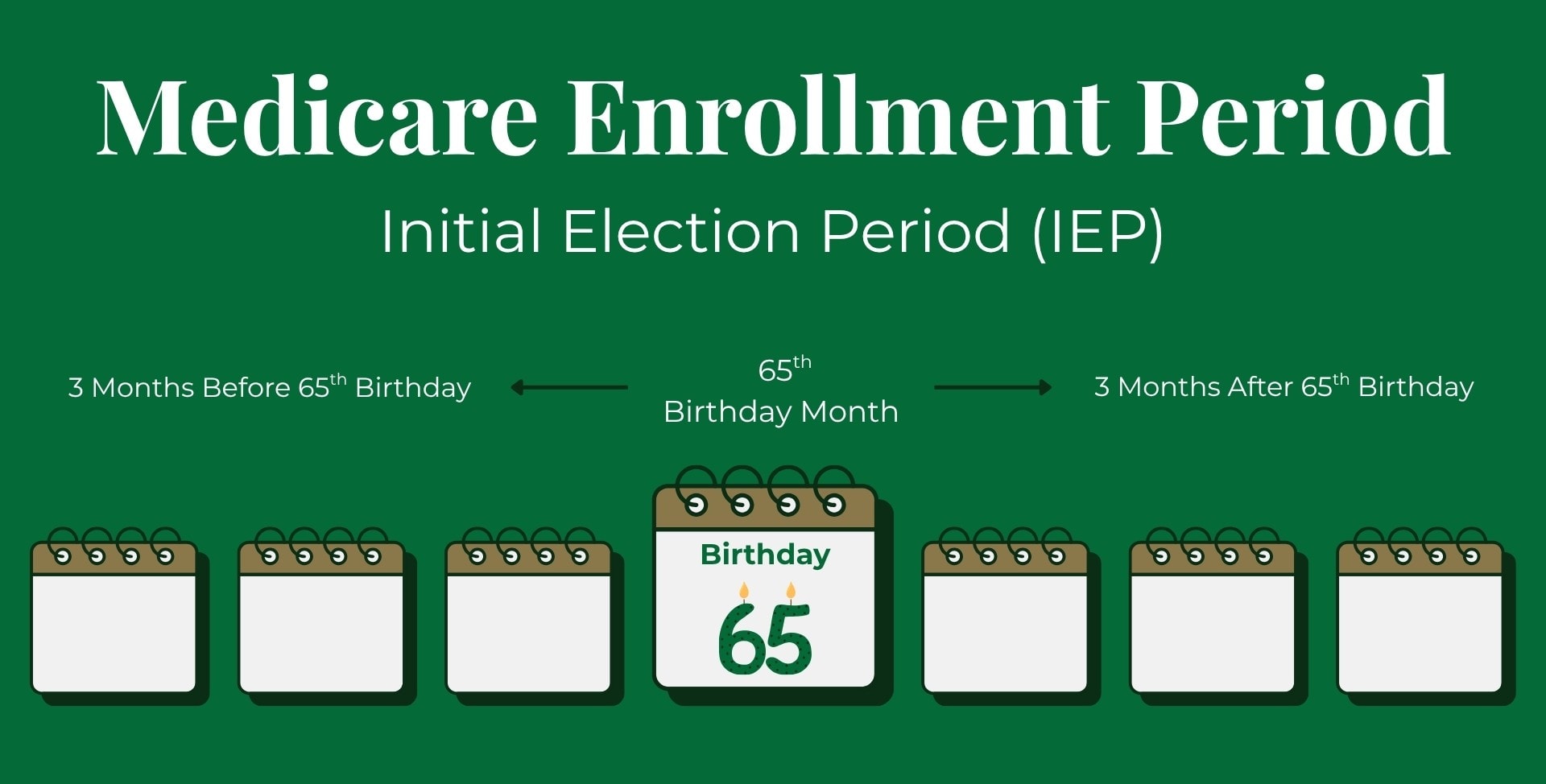
Note. Adapted from What Is a Medicare Initial Enrollment Period (IEP)?, by C. Worstell, 2024, MedicareAdvantage.com. https://www.medicareadvantage.com/enrollment/medicare-iep
Otherwise, you need to sign up for Medicare during your Initial Enrollment Period. This is a seven-month window that starts three months before the month you turn 65, includes your 65th birthday month, and ends three months after that month. If you’re still working, you may be able to delay the initial Medicare enrollment period. Whether you can do this depends on the size of your employer, your current healthcare plan, and other factors.
FAQs
You may take penalty-free withdrawals from your 401(k) if you leave your job during or after the year you turn 55. This rule only applies to the retirement plan of the employer you just left. At age 59½, you can generally withdraw funds from any IRA or 401(k) without a 10% penalty.
You can collect Social Security retirement benefits as early as age 62, but your monthly amount will be lower. You receive your full benefit amount at your full retirement age, which falls between 66 and 67. Waiting until age 70 gives you the highest possible monthly payout.
The IRS forces you to take a certain amount of money out of your traditional retirement accounts each year. This starts at age 73 or 75, depending on your birth year.
Your Initial Medicare Enrollment Period is a seven-month window around your 65th birthday. If you’re already receiving Social Security benefits, the SSA will automatically enroll you. Otherwise, you must enroll manually.

Get Your Free Customized Money Map
Visit with an advisor to address your retirement strategy.